
Reviews bring customers. Customers bring reviews.
In between sit two things, in this order. Visibility gets you found — being named when somebody asks Google, or asks an AI assistant, who to call. Trust gets you chosen once they've found you. You don't lose to better businesses. You lose to the ones that got found first.
Take our 3-minute scorecard
What decides the answer
Why any of this works
When someone asks an assistant who to call, it isn't reading your website and it isn't judging how good you are. It reads what your customers have said about you — how much of it there is, how recently it arrived, which words they used, and whether you bothered to reply.
Google's map results run on the same evidence. So do the star ratings that decide which listing gets the click.
Which means your reviews don't just decide whether you get named. They decide how you get described — and whether you come up at all for the job somebody actually asked about.
You don't lose to better businesses. You lose to the ones that got found first.
Three come up consistently:
- Fairview Physio & Sports Clinic The one runners mention most — reviewers repeatedly describe gait analysis and same-week appointments.
- The Movement Rooms Consistently praised for hands-on treatment and clear rehab plans.
- Cotswold Rehab Well reviewed for post-injury recovery and flexible appointments.
An illustration, not a real result — but it is the shape of the answer. All three are good. Only one gets described in the words the question was asked in.
Where to start
The Reputation Growth System
That's the method I use with every client, and it's the same four stages whether you run it yourself or I run it for you. Activate lays the foundations once. Accelerate and Amplify then run continuously — and Automate is what keeps them running.
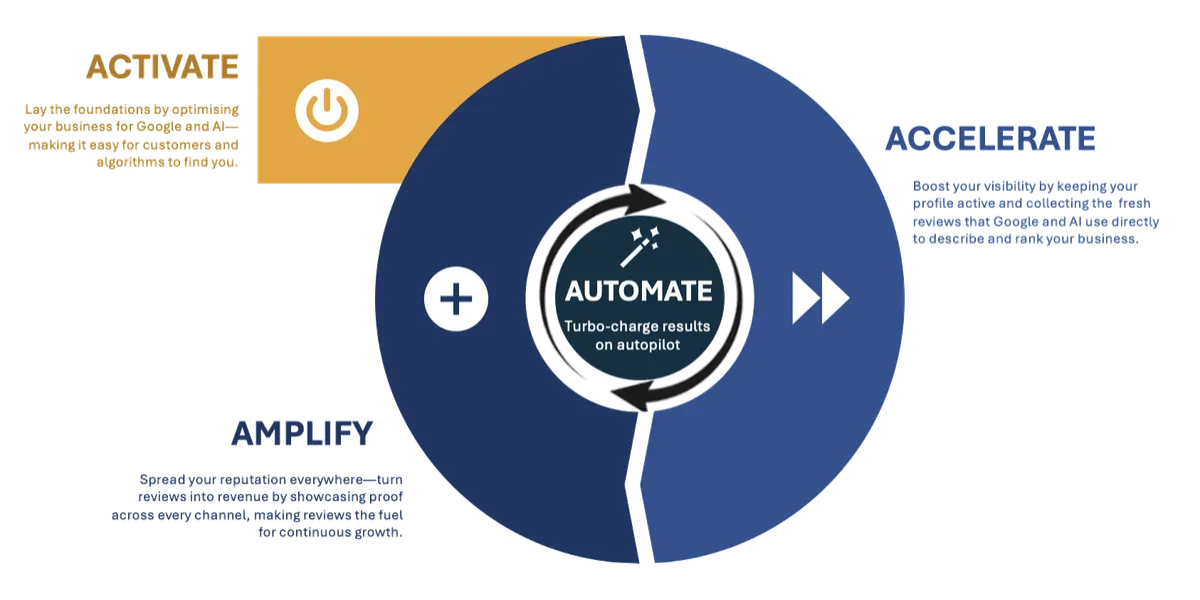
The first three you can do yourself without Automation. I'm not going to pretend otherwise: I teach them for nothing in the masterclass and the playbook, and some businesses run them by hand for years.
Stage one — Activate
Most profiles are set up, then never touched again.
Name, address, phone, done — and then nothing. No services, half the categories missing, a description written for nobody, photos from whenever the account was opened. Activate fixes that, and makes the same details match everywhere else you're listed, so Google and AI can find you and describe you properly.
Could you do it yourself
Yes. A focused afternoon gets the profile right — description, categories, services, photos, hours. After that it's regular maintenance as your services and seasons change.
What I do
Show you what's missing and how to fix it. Or fix it for you, and track your search terms on a map of your area so we can both see where you rank.
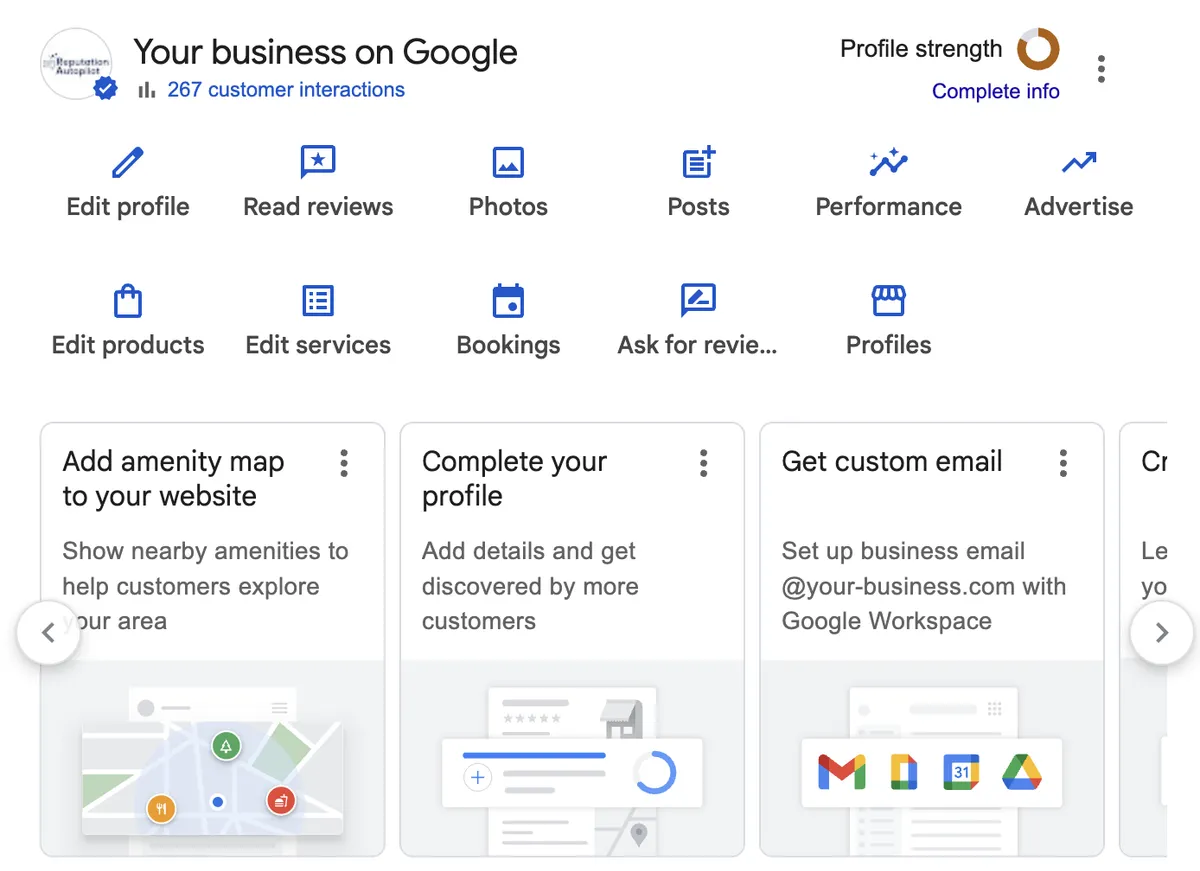
Profile strength is Google telling you the profile isn't finished. Most businesses never look.
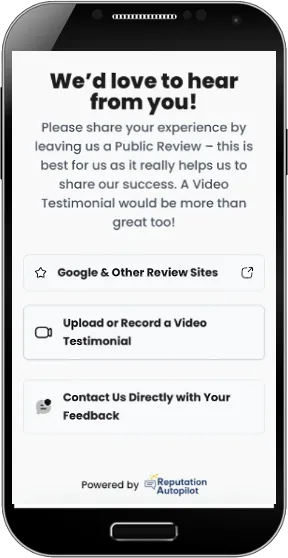
Give people options and let them choose. The easier you make it, the more you get back.
Stage two — Accelerate
Never stop the flow.
One request, at the moment the customer is happiest, by the channel they actually answer. One reminder. Then nothing. Set the expectation early — tell people you'll be asking — and make it take seconds rather than minutes, because friction is why most requests go nowhere.
Could you do it yourself
Yes, until you're busy. Asking is the first thing dropped in a difficult week, and a difficult week is exactly when you want next month's reviews already arriving.
What I do
Map your customer journey with you and pick the moments. Or set it all up for you — sequences, NFC cards for the counter or the van, and training for whoever faces your customers.
Stage three — Amplify
A review sitting on Google is doing a third of its job.
The same review on your website, in your search listing, on social, in a reply written in your own voice, and quoted in an article that answers what people are actually asking — that's the whole job. Every one of those is another place you can be found, and another thing an assistant can read.
Could you do it yourself
Partly. Most people copy and paste a few good reviews onto the website and that's where it stays — frozen, dated, and never updated. Replying, posting and turning feedback into content is where it slips entirely.
What I do
Show you where the proof should sit and how to use it. Or do it for you — reviews publishing to your site as they arrive, replies drafted in your voice, weekly posts to your profile and social, and articles built for what your customers actually say.
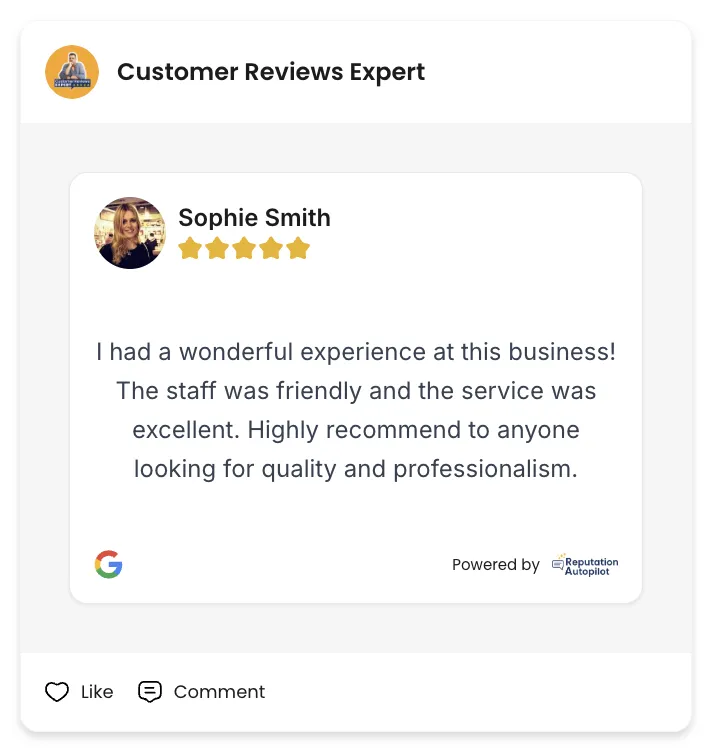
Your customers' words, working in more than one place.
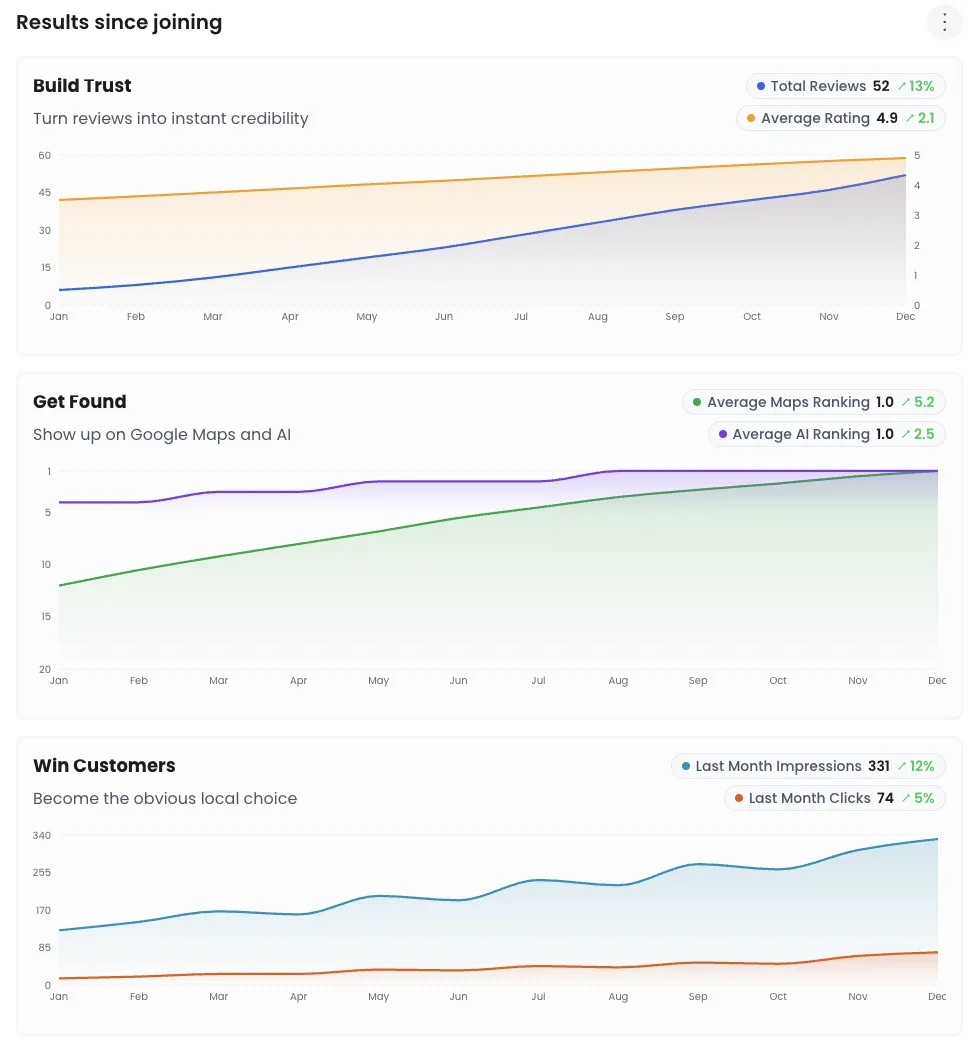
Nobody had to remember to do anything for this to happen.
Stage four — Automate
Doing it once is easy. Doing it every week isn't.
Every job needs an ask. Every ask needs a reminder. Every review needs a reply. Every week, new reviews onto the website, a post to your profile, something to social, an article written around what people are asking. Someone has to constantly look at what's working and what isn't. It's not that it's hard. It's that you're busy doing the work people are reviewing you for.
Could you do it yourself
For a while. Then a busy fortnight arrives and the asking stops. Nothing obvious breaks, which is why it keeps happening — until three months later the work has quietly gone somewhere else.
What I do
Map the review request journey, configure Reputation Autopilot around it, and show you how to scale your review collection — then automate everything else that needs doing.
What actually runs
You ask. Everything after that is handled.
Three things it deliberately doesn’t do
It won’t write the review for your customer — the software can, and we switch it off. It won’t sound them out first and only ask the happy ones. And it won’t offer them anything in return. All three would work for a while, and all three put every review you own at risk.
What it adds up to
Running, it compounds. That's the part advertising can never do.
More reviews make you more visible and more obviously worth trusting. That visibility puts you in front of people who were going to buy from somebody — and now buy from you. Every one of those customers gets asked, and the wheel comes round heavier than it went.
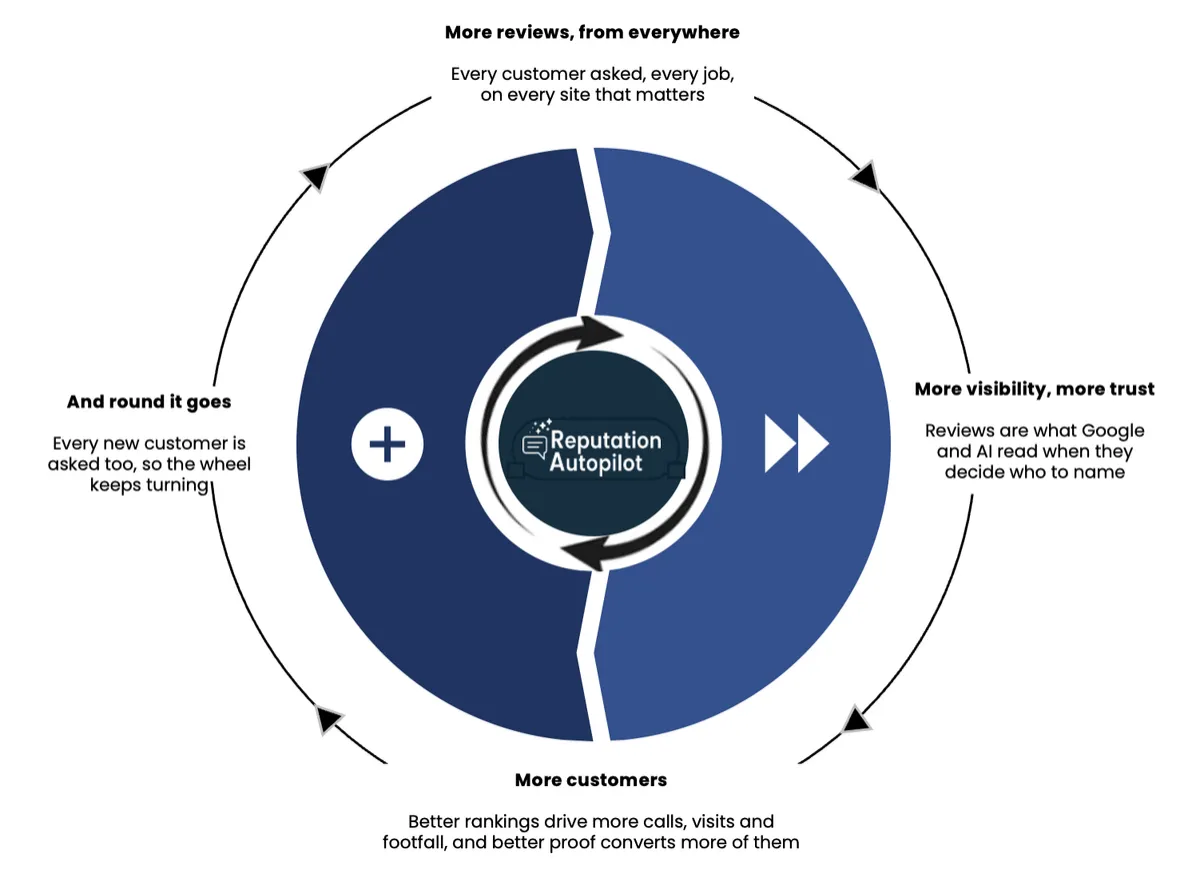
Advertising stops the day you stop paying. The reviews you collect this quarter are what gets read next quarter, and the quarter after that.
Up and running today
Planned, set up and live in two sessions.
Session one - the strategy
We map your customer journey and find the moments where somebody's genuinely pleased — that's where the ask goes. Then how to collect: what to say, who says it, the scripts, the sequence, and what to do in person versus by text. About an hour.
Session two — setting it up
Your review sites and social accounts connected, request flows and links built, widgets on your site, AI trained on your tone of voice, and the agents, automations and notifications set running. Half an hour, and it's live.
Live, running and collecting for a week before you pay anything.
The Reputation Growth Strategy is usually £299. Included with every plan.
What to expect
Reviews arrive quickly.
Being Recommended takes longer.
Rankings and recommendations respond to a pattern rather than a burst, so judge it at three months rather than three weeks.
If anyone promises you the top three in Maps, or a name-check from ChatGPT, in three weeks — they're selling you something else.
Questions I get asked
Before you book anything.
Do I have to write anything?
No. Replies, posts and articles are drafted for you. You approve them, or you let them go out. The only writing that has to be yours is the odd reply to something unusual, and I'll tell you when that is the case.
What happens when I get a bad review?
You reply to it, properly, and it does less damage than you think. A profile with nothing but five stars reads as suspicious to people and to AI both. What protects you is volume and recency: one poor review among six recent good ones is a bad day, and among sixty it's noise.
Is this just software?
No. The platform sends the requests and publishes the proof. The work is deciding where the ask belongs in your customer journey, training whoever faces your customers, and reading what comes back. That part is me.
Could I do this myself?
Stages one to three, yes, and some businesses do — I'll show you how for nothing if that's the route you want. The fourth is where it falls over, because it depends on somebody remembering every single week in the weeks when the work is busiest.
What if I've only got a handful of reviews now?
That's the normal starting point, and it's the easiest one to move. Going from nine reviews to forty changes how you look far more than going from a hundred and forty to a hundred and eighty.
Be the obvious choice.
Forty-five minutes, no pitch deck. I'll look at your profile before we speak and tell you what I'd do first — whether or not you work with me.
Want the numbers first? See what it costs →

Reputation Autopilot — a CX Strategy company.
CX Strategy Ltd, registered in England & Wales no. 15210017. Registered office: 20 Northcroft The Park, Cheltenham, Glos, GL50 2NL.